Understanding Climate Zone 5A and Lake Michigan's Impact
If you own a home in Kenosha, you live in one of the most thermally challenging regions in the Midwest. Climate Zone 5A, which covers much of Wisconsin and the areas surrounding Lake Michigan, presents unique insulation challenges that most homeowners underestimate. The proximity to the lake creates a dynamic thermal environment where cold winters are intensified by lake-effect weather patterns, and humidity fluctuations can compromise poorly sealed homes year-round.
The National Association of Home Builders classifies Zone 5A as a cold climate requiring serious attention to air sealing and thermal resistance. Winter temperatures regularly drop below zero, and the heating season extends from October through April. What makes Kenosha particularly demanding is the lake effect itself. Lake Michigan moderates temperatures but also increases moisture in the air, which means your insulation system must handle both extreme cold and humidity control simultaneously. A poorly sealed home in this climate zone will hemorrhage energy dollars and create uncomfortable temperature swings throughout the year.
Why Air Sealing Is Non-Negotiable in Cold Climates
Air sealing is the foundation of any effective insulation strategy, and in Climate Zone 5A, it is absolutely non-negotiable. Even the best insulation material cannot perform effectively if conditioned air leaks out through cracks, gaps, and penetrations throughout your home's envelope. The U.S. Department of Energy estimates that air leakage accounts for 25 to 40 percent of heating and cooling energy loss in typical homes. In Kenosha, where heating costs dominate your annual utility bill, this loss translates directly into hundreds of dollars wasted each winter.
Traditional insulation like fiberglass batts and blown cellulose cannot seal air leaks because they are porous materials designed to trap still air within their fibers. They do nothing to stop air movement through your home's structure. This is where Closed Cell Spray Foam Insulation becomes transformative. Closed cell foam expands to fill every cavity, crack, and gap, creating an air barrier while simultaneously providing insulation. In a cold climate like Zone 5A, this dual function makes spray foam the most effective choice for attics, crawl spaces, and rim joists where air leakage is most severe.
Crawl Space Insulation and Cold Floor Problems
One of the most common complaints from homeowners in Kenosha is cold floors, particularly in bedrooms and bathrooms during winter. This discomfort almost always originates in the crawl space below. If your home is built on a pier and beam foundation or has a vented crawl space, the area beneath your first floor is exposed to outdoor temperatures. Cold air circulates under your home, heat is drawn downward through the floor, and you experience that miserable sensation of standing on a frozen surface. The best solution is proper crawl space spray foam insulation combined with air sealing of the rim joist and band board.
Crawl space insulation is not simply about adding R-value. The best insulation for crawl space applications must address moisture, air leakage, and thermal resistance simultaneously. In Climate Zone 5A, where humidity from Lake Michigan can penetrate crawl spaces, Closed Cell Spray Foam Insulation is superior to traditional batts or blankets because it resists moisture absorption and creates an unbroken air seal. Pier and beam insulation using closed cell foam eliminates cold floors, reduces heating costs, and prevents moisture-related damage that can compromise your home's structural integrity over time.
Attic Air Sealing and Heat Loss Prevention
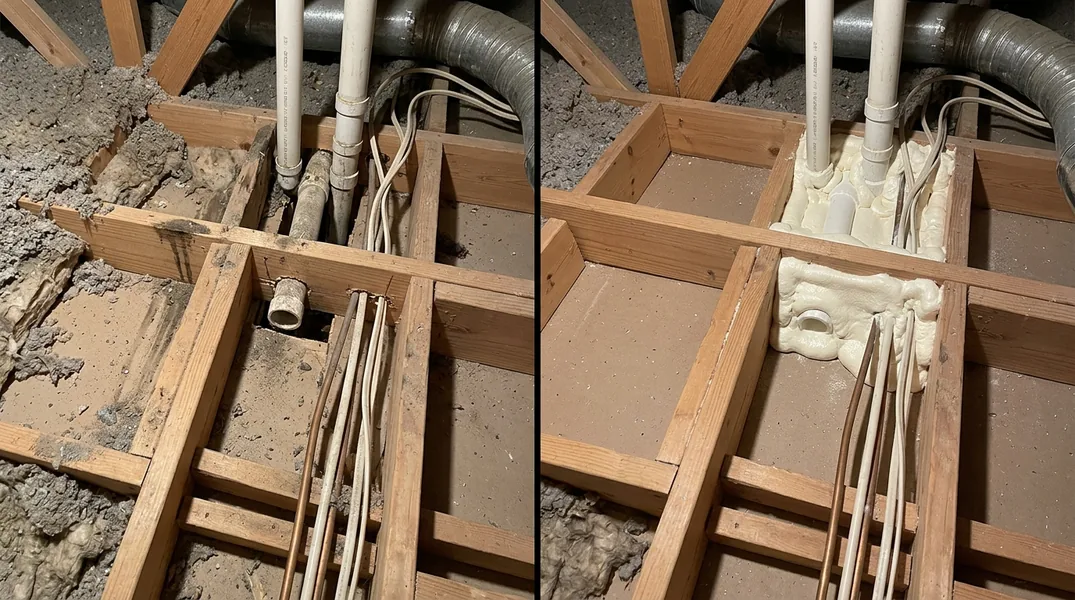
Heat naturally rises, which means your attic is the primary pathway for conditioned air to escape your home during winter. In Climate Zone 5A, an unsealed attic is essentially a direct connection between your heated living space and the frozen outdoor air. Attic Spray Foam Insulation addresses this problem by sealing penetrations around electrical chases, plumbing vents, HVAC ducts, and the rim board where the attic meets exterior walls. These small gaps may seem insignificant, but together they create substantial air leakage that forces your heating system to work harder and longer.
The choice between Closed Cell Spray Foam Insulation and Open Cell Spray Foam Insulation in the attic depends on your specific needs. Closed cell foam provides superior R-value per inch and creates a vapor barrier, making it ideal for attics in cold climates where you want to prevent warm, moist air from condensing in the insulation. Open cell foam is more affordable and allows vapor transmission, which some builders prefer in certain applications. For most homeowners in Kenosha, closed cell is the better choice because it maximizes thermal performance and prevents moisture problems that can lead to mold and structural damage.
Wall and Rim Board Sealing Near Me: The Often-Forgotten Weak Point
Many homeowners focus on attic and crawl space insulation but overlook the rim board and exterior walls, which are critical air leakage points in Climate Zone 5A. The rim board is the horizontal member that sits on top of your foundation and connects the first floor to the foundation wall. This area is typically exposed to outdoor temperature and air movement, yet it is often poorly insulated or left completely unprotected. In winter, unconditioned air infiltrates through gaps in this area, creating drafts and thermal loss throughout your home.
Wall & Injection Foam Insulation can be used to seal rim boards and fill cavities in exterior walls, particularly in older homes where original insulation has settled or deteriorated. Spray foam injection into rim board cavities creates a continuous thermal and air barrier that traditional batts cannot match. If you are experiencing cold drafts along exterior walls or noticing that certain rooms are difficult to heat, rim board air sealing combined with wall foam insulation is often the solution. This work is frequently overlooked because it is less visible than attic insulation, but its impact on your home's overall thermal performance is substantial.
Planning Your Air Sealing Strategy: Getting Started in Kenosha
The most effective approach to addressing air sealing in Climate Zone 5A is a comprehensive strategy that prioritizes the biggest sources of heat loss first. Your attic typically accounts for 25 to 35 percent of heating loss, crawl spaces account for another 15 to 25 percent, and air leakage through walls and rim boards makes up the remainder. Starting with Attic Spray Foam Insulation, then addressing crawl space insulation, and finally sealing walls and injection points creates a layered defense against the harsh winters that Kenosha residents face annually.
The team at Kenosha Spray Foam Insulation understands the specific demands of Climate Zone 5A and can help you develop a prioritized plan based on your home's age, current condition, and budget. Call (262) 287-9947 today to schedule a free estimate and learn how air sealing and spray foam insulation can reduce your heating bills and improve comfort throughout your home. With proper air sealing and insulation, you can transform your home into a tight, efficient envelope that performs well even during the coldest Lake Michigan winters.
Looking for a professional spray foam insulation contractor in Kenosha? Kenosha Spray Foam Insulation responds fast for all your spray foam insulation needs.
Get a Free Quote