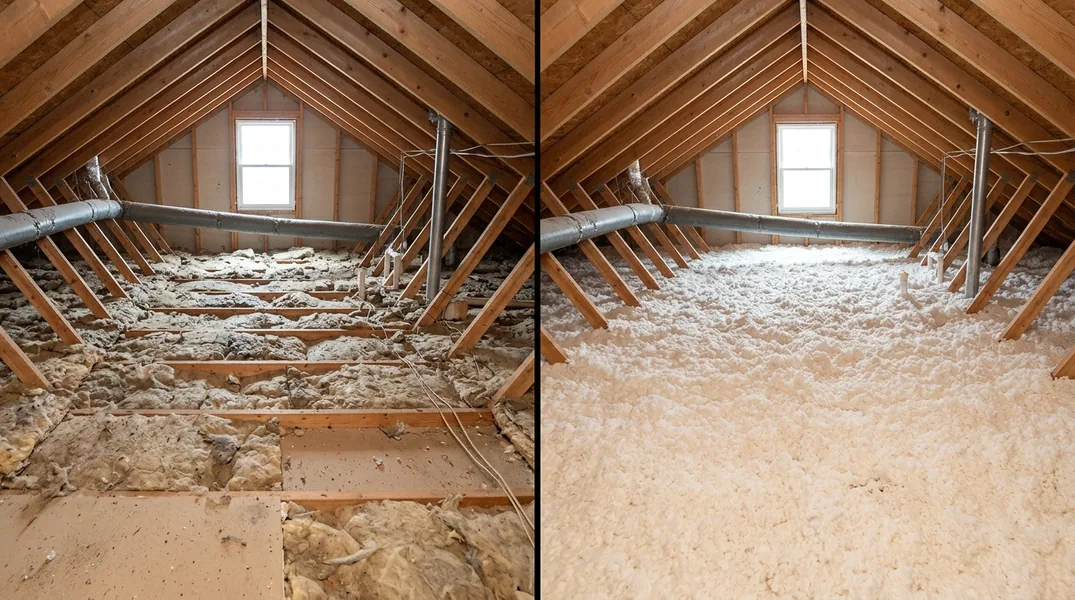
The Rim Joist Problem in Kenosha's Mid-Century Ranches
If you own a mid-century ranch home in Kenosha, you likely appreciate the open floor plans, efficient layouts, and solid construction that made these homes so popular in the 1950s and 1960s. What you may not appreciate, however, is how much conditioned air is escaping through your rim joists right now. The rim joist, also called the band board or rim beam, is the horizontal structural member that sits on top of your foundation wall and supports your first floor. It's one of the most overlooked and poorly insulated areas in older homes.
Most mid-century ranches were built with minimal or no rim joist insulation. If insulation was added during renovation, it was often fiberglass batts or blown-in cellulose, both of which leave gaps, settle over time, and fail to create an airtight seal. This means your heating and cooling system works overtime to maintain comfortable temperatures, driving up energy bills and reducing comfort in rooms above the foundation. The rim joist represents a significant thermal weak point that many homeowners don't discover until they notice cold floors in winter or high utility costs year-round.
Why Rim Joists Leak So Much Heat
Rim joists are thermal trouble zones for several reasons. First, they're exposed to both the interior and exterior of your home, making them a direct conduit for heat loss in winter and heat gain in summer. Second, the area is difficult to insulate properly with traditional materials because of its irregular shape, the presence of pipes and wiring, and the many small cavities between floor joists. Blown-in insulation and fiberglass batts don't conform perfectly to these spaces, leaving air pockets that allow warm air to escape.
In Kenosha's cold climate, rim joist heat loss becomes especially noticeable. Winter temperatures regularly dip below freezing, and your heating system must work harder to compensate for the energy bleeding out through these gaps. Studies show that rim joists can account for up to 20 percent of a home's total heat loss if left uninsulated or poorly insulated. When combined with other air leaks in older homes, rim joist inefficiency can translate to heating bills that are hundreds of dollars higher than they need to be. The problem compounds if you have a crawl space or basement, where the rim joist is fully exposed to outdoor temperatures.
Spray Foam vs Blown-In Insulation: Which Wins for Rim Joists
When it comes to insulating rim joists effectively, Attic Spray Foam Insulation and blown-in insulation are not created equal. Blown-in insulation, whether cellulose or fiberglass, is poured or blown into cavities and relies on gravity and friction to stay in place. It cannot seal air leaks because it doesn't stick to surfaces or fill irregular gaps. Over time, blown-in insulation settles and compresses, reducing its R-value and effectiveness. For rim joists, which have a complex geometry with pipes, wiring, and multiple small cavities, blown-in insulation is simply not the best solution.
Spray foam, by contrast, expands to fill every void and adheres to all surfaces, creating a complete air seal. When spray foam is applied to a rim joist, it conforms perfectly to the space, encapsulates pipes and wiring, and prevents air infiltration. The difference is dramatic: spray foam provides an R-value of 6 to 7 per inch (depending on whether you choose open or closed cell), while blown-in cellulose offers about 3.6 per inch. This means you need less thickness of spray foam to achieve the same insulation performance, and you get superior air sealing as a bonus. For homeowners in Kenosha concerned about energy efficiency and comfort, spray foam is the clear winner for rim joist applications.
Spray Foam vs Fiberglass: Why Fiberglass Falls Short
Fiberglass batts are the traditional go-to insulation for many homeowners, partly because they're inexpensive and easy to install yourself. However, fiberglass is poorly suited to rim joists for several important reasons. First, fiberglass batts come in standard widths and thicknesses, which rarely match the exact dimensions of rim joist cavities. This forces installers to cut and compress batts, reducing their effectiveness. Second, fiberglass does not create an air seal. Air can flow around the edges of batts and through gaps in the material itself, defeating much of the insulation's purpose.
Additionally, fiberglass is susceptible to moisture damage and does not perform well in damp basements or crawl spaces, which is where many rim joists are located. Over time, fiberglass can absorb moisture, lose its loft, and become a breeding ground for mold. Closed Cell Spray Foam Insulation, by contrast, is moisture resistant and creates a vapor barrier, protecting your home's structure from water damage. When you compare the long-term durability, air sealing performance, and R-value of spray foam versus fiberglass, the investment in spray foam pays dividends in comfort and energy savings for years to come.
Open Cell vs Closed Cell Spray Foam for Rim Joists
Once you've decided that spray foam is the right choice for your rim joist, the next question is whether to use open cell or closed cell. Both are superior to blown-in insulation and fiberglass, but they have different strengths. Open Cell Spray Foam Insulation is less dense, slightly less expensive, and offers an R-value of about 3.6 per inch. It's an excellent choice if your rim joist is in a dry environment and you're primarily concerned with insulation value and air sealing. Open cell foam is also more flexible and can accommodate minor structural movement without cracking.
Closed cell spray foam is denser, more expensive, and provides an R-value of 6 to 7 per inch. It's also a vapor barrier, making it ideal for rim joists in basements or crawl spaces where moisture is a concern. Closed cell foam is more rigid and provides additional structural strength to your home. For most rim joist applications in Kenosha, closed cell spray foam is the preferred choice because it offers superior insulation, moisture protection, and durability. The higher upfront cost is offset by lower heating and cooling bills and the peace of mind that comes with knowing your rim joist is properly sealed and protected.
Getting Your Rim Joist Insulated: Next Steps Near Me
If you're ready to stop losing money through your rim joists, the first step is to schedule a professional assessment. A trained technician can inspect your rim joist, identify air leaks and moisture issues, and recommend the best insulation solution for your home. This is especially important in older mid-century ranches, where hidden problems like water intrusion or pest damage may complicate the insulation process. Kenosha Spray Foam Insulation offers free evaluations so you can understand exactly what your home needs and what the project will cost.
When you contact Kenosha Spray Foam Insulation at (262) 287-9947, you'll speak with experienced professionals who understand the unique challenges of insulating older homes in our region. We'll discuss whether open cell or closed cell foam is right for your situation, explain how the application process works, and answer any questions you have about the project. If you'd prefer to start with a free estimate, you can request one online and we'll get back to you promptly. Investing in rim joist insulation is one of the smartest energy efficiency upgrades you can make to a mid-century ranch home.
Looking for a professional spray foam insulation contractor in Kenosha? Kenosha Spray Foam Insulation responds fast for all your spray foam insulation needs.
Get a Free Quote