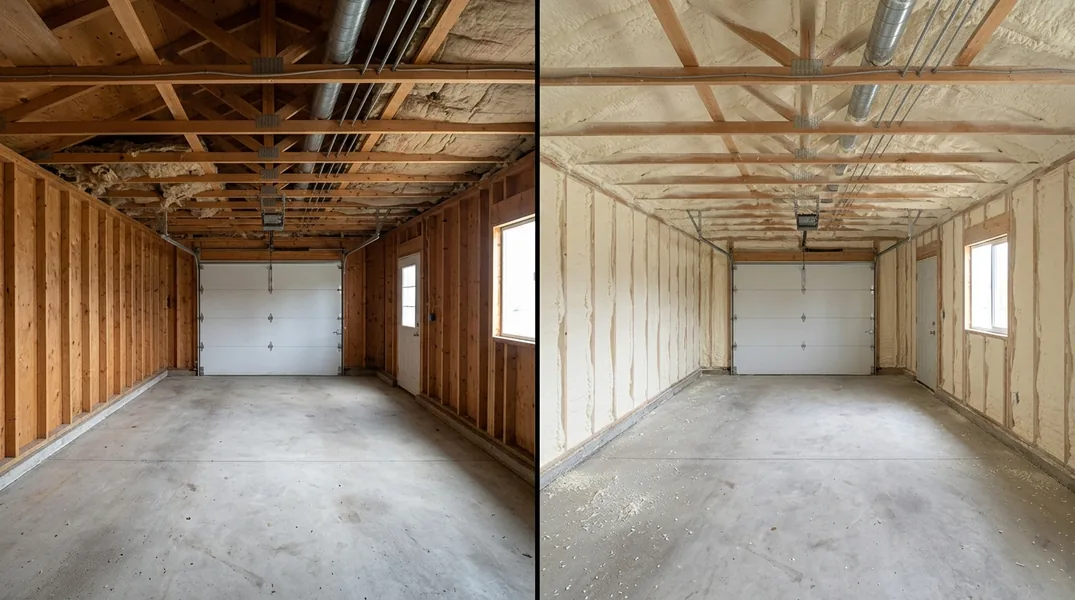
Why Kenosha Homeowners Face Unique Winter Draft Challenges
Living in Kenosha means experiencing some of the harshest winter conditions in Wisconsin. The proximity to Lake Michigan creates a unique microclimate that intensifies cold air infiltration, especially in basements and lower levels of homes. These lakeside winds funnel directly into the region, and when they meet poorly insulated basement walls and rim joists, homeowners face significant energy loss and discomfort.
The problem isn't just about temperature. Winter drafts in basements lead to higher heating bills, cold floors on upper levels, and moisture issues that can damage foundation walls and create conditions for mold growth. Many Kenosha homeowners don't realize that their basement is the primary culprit behind whole-house energy loss. Traditional fiberglass insulation, if present at all, settles over time and loses its R-value, leaving gaps where Lake Michigan's relentless winds can penetrate.
How Lake Michigan Wind Patterns Affect Your Home's Thermal Envelope
Lake Michigan acts as a massive heat sink during winter months. Cold air masses develop over the water and move inland, creating wind patterns that directly impact homes within 10 to 15 miles of the shoreline. Kenosha's location makes it particularly vulnerable to these wind effects. The lake effect wind can accelerate heat loss through basement walls, which are often the weakest link in a home's thermal envelope.
Your basement walls are exposed to ground temperature on the exterior and conditioned air on the interior, making them a natural pathway for thermal loss. When Lake Michigan winds push cold air against your foundation, any gaps, cracks, or poorly sealed rim joists become highways for infiltration. The rim joist area, in particular, is notoriously difficult to insulate with traditional methods because of its irregular geometry and the presence of rim board, band board, and sill plate components.
Why Traditional Insulation Falls Short in Kenosha Basements
Fiberglass batts and blown-in cellulose have been the standard basement insulation choice for decades, but they have serious limitations in a climate like Kenosha's. These materials rely on trapped air pockets for insulation value, but they don't create an air barrier. This means wind-driven infiltration can bypass the insulation entirely, negating much of its R-value benefit. Additionally, fiberglass compresses over time, loses effectiveness, and can absorb moisture from basement humidity, further reducing its performance.
Basement environments present unique challenges that traditional insulation simply cannot handle. Moisture is a constant concern, and fiberglass absorbs water like a sponge, which accelerates mold growth and degrades the material. Blown-in insulation settles and creates voids around pipes, electrical conduits, and irregular framing. The result is a patchwork of insulated and uninsulated areas where cold air finds its way through. Homeowners in Kenosha need a solution that creates both thermal resistance and an air barrier simultaneously.
Spray Foam Insulation: The Solution for Kenosha Winter Drafts
Closed Cell Spray Foam Insulation is the gold standard for basement insulation in cold, windy climates like Kenosha. Unlike traditional insulation, spray foam expands to fill every cavity, crack, and gap in your basement walls and rim joist area. This expansion creates a continuous air barrier that stops infiltration at the source, preventing Lake Michigan's winter winds from reaching your conditioned living spaces.
Closed cell foam offers an R-value of approximately 6.5 to 7 per inch, which is significantly higher than fiberglass (R-3.2 to R-3.8 per inch) or cellulose (R-3.6 per inch). More importantly, closed cell foam is inherently moisture-resistant. The dense cell structure prevents water absorption, making it ideal for basements where humidity and occasional moisture are inevitable. When applied to basement walls and rim joists, closed cell foam creates a vapor barrier that protects your foundation and framing from moisture damage while maintaining superior thermal performance through harsh Kenosha winters.
The application process is equally important. Professional spray foam contractors use specialized equipment to apply the foam in controlled thicknesses, ensuring complete coverage and proper curing. The foam adheres directly to concrete, wood, metal, and other basement materials, sealing every penetration and creating a seamless thermal envelope. This is something no other insulation method can achieve.
Metal Building and Barndominium Insulation: Extending Protection Beyond Traditional Homes
Beyond traditional residential basements, many Kenosha property owners are investing in metal buildings, barndominiums, and pole barn structures. These buildings present even greater insulation challenges because metal conducts heat rapidly and creates thermal bridging. Closed Cell Spray Foam Insulation is the best insulation for metal building applications because it adheres directly to metal surfaces, eliminates thermal bridging, and creates a complete air barrier in one application.
Pole barn insulation and barndominium insulation require solutions that handle large open spaces efficiently. Spray foam can be applied to metal roof decking, wall panels, and structural members without requiring additional framing or vapor barriers. The superior R-value and air sealing properties of spray foam make it the most cost-effective choice for these applications, especially in a region where Lake Michigan's influence creates demanding winter conditions. Whether you're insulating a metal agricultural building or converting a pole barn into a living space, spray foam delivers performance that traditional insulation cannot match.
Getting Started: Spray Foam Insulation Near Me in Kenosha
If winter drafts are compromising your comfort and energy bills, the first step is a professional assessment of your basement and rim joist area. Kenosha Spray Foam Insulation specializes in diagnosing thermal weak points and recommending the right insulation solution for your home's unique needs. Whether you need basement insulation, rim joist sealing, or insulation for a metal building project, our team has the expertise and equipment to deliver results that stop Lake Michigan's winter winds for good.
The investment in quality insulation pays dividends immediately. Most homeowners report noticeable reductions in heating costs within the first winter, along with improved comfort and elimination of cold spots. Beyond energy savings, you're protecting your home's structural integrity by preventing moisture infiltration and reducing the conditions that promote mold growth. Contact Kenosha Spray Foam Insulation today at (262) 287-9947 to schedule a free estimate. Our team will assess your specific situation, explain your options, and provide transparent pricing for your project. Don't let another winter pass with drafts and high heating bills. Take control of your home's thermal envelope with spray foam insulation from the professionals who understand Kenosha's climate challenges.
Looking for a professional spray foam insulation contractor in Kenosha? Kenosha Spray Foam Insulation responds fast for all your spray foam insulation needs.
Get a Free Quote