Why Kenosha Bungalows Present Unique Insulation Challenges
Kenosha's charming bungalows and early 20th-century homes have character, but they also have insulation headaches that modern houses rarely face. Many of these older properties were built with balloon framing, a construction method that creates continuous cavities from the basement all the way to the attic. Unlike platform framing used in newer homes, balloon framing leaves no fire breaks between floors, and those empty spaces become highways for air leakage, pest infiltration, and heat loss.
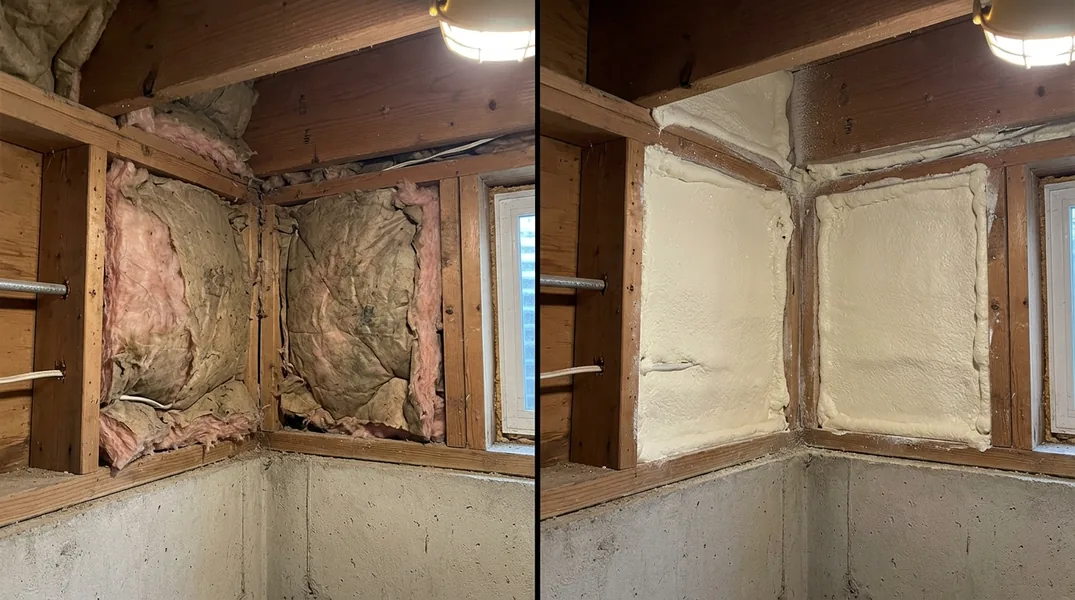
The rim joist area, where the first floor sits on top of the foundation, is another notorious weak spot in Kenosha bungalows. This transition zone is often poorly sealed or left completely open, allowing cold air to pour into living spaces during winter and conditioned air to escape in summer. Add in decades of settling, original single-pane windows, and gaps around old electrical penetrations, and you've got a home that works overtime to maintain comfort. The good news is that Attic Spray Foam Insulation can address all of these issues in ways traditional batts and blown-in insulation simply cannot.
Is Spray Foam Insulation Worth It for Older Homes?
For homeowners asking 'is spray foam insulation worth it,' the answer depends on your priorities and budget, but for Kenosha bungalows, the value proposition is compelling. Spray foam creates an air-tight seal that traditional insulation cannot match. When applied to rim joists, balloon framing cavities, and attic spaces, it stops air infiltration at the source. This means your heating and cooling systems don't have to work as hard, which translates directly into lower energy bills. Many homeowners report 15 to 30 percent reductions in heating and cooling costs after spray foam installation, which can offset the initial investment within 5 to 10 years.
Beyond energy savings, spray foam provides structural benefits that fiberglass batts don't offer. It adds rigidity to walls, helps prevent moisture intrusion, and creates a continuous thermal barrier that reduces cold spots and drafts. For older homes with existing moisture issues or pest problems, the sealing properties of spray foam are invaluable. You're not just buying insulation; you're buying air sealing, moisture control, and long-term durability in one application. When you factor in improved comfort, lower utility bills, and reduced HVAC strain, spray foam becomes a smart investment for homeowners serious about upgrading their homes.
Is Spray Foam Insulation Safe? Addressing Off-Gassing and Curing Concerns
Safety is a legitimate concern when homeowners ask 'is spray foam insulation safe.' The short answer is yes, when installed by certified professionals and allowed to cure properly. However, understanding the process helps ease concerns. During application, spray foam releases volatile organic compounds (VOCs) as it expands and hardens. This is normal and temporary. Professional installers ensure proper ventilation during application, and homeowners are advised to vacate the home for 24 to 48 hours while the foam cures. Once fully cured, spray foam becomes inert and poses no ongoing health risk.
Spray foam off-gassing is a real phenomenon, but it's short-lived and manageable. The smell you notice immediately after application is not harmful; it's simply the chemical reaction as the two components mix and expand. Within a few days, as the foam fully cures, off-gassing diminishes dramatically. Reputable installers like Kenosha Spray Foam Insulation follow EPA guidelines and use products that meet strict safety standards. If you have respiratory sensitivities, asthma, or other health concerns, discuss this with your installer before work begins. They can take extra precautions, such as extended ventilation or scheduling application when you can stay elsewhere. The key is working with professionals who prioritize safety and follow best practices from start to finish.
Spray Foam Insulation Pros and Cons: A Balanced Look
Like any insulation method, spray foam has advantages and drawbacks worth understanding. On the pro side, spray foam offers superior air sealing, high R-value per inch, moisture resistance, and long-term durability. It conforms to irregular spaces, fills gaps around pipes and wires, and provides structural reinforcement. For homes with balloon framing or complex rim joist configurations, these benefits are hard to beat. Spray foam also resists settling over time, unlike blown-in cellulose or fiberglass, so your R-value stays consistent for decades. If you're concerned about indoor air quality, the airtight seal that spray foam creates can actually improve it by preventing outdoor pollutants and pests from entering through gaps.
The cons are primarily upfront cost and irreversibility. Spray foam is more expensive than traditional insulation options, and once it's applied, removing or modifying it is difficult and costly. There's also the installation disruption: you'll need to vacate the home during application and curing. Some homeowners worry about spray foam's environmental impact, though modern formulations are increasingly eco-friendly. Closed Cell Spray Foam Insulation offers higher R-value but costs more than Open Cell Spray Foam Insulation, which is more affordable but has a lower R-value. Weighing these factors against your home's specific needs and your long-term plans is essential before committing to spray foam.
Tackling Balloon Framing and Rim Joists with Spray Foam
Balloon framing in older Kenosha bungalows creates a vertical cavity that runs from the basement sill to the attic. This design was common before modern building codes required fire breaks between floors. The problem is that these cavities act like chimneys, pulling cold air up from the basement and allowing warm air to escape through the attic. Traditional insulation can't effectively seal these cavities because the cavities are often irregular, contain old wiring and plumbing, and span multiple stories. Spray foam, however, expands to fill every nook and cranny, creating a continuous air barrier that stops this convective heat loss in its tracks.
Rim joists present a similar challenge. The area where the first-floor rim board meets the foundation is typically the most poorly insulated part of an older home. Cold concrete foundation walls and exposed rim joists radiate cold into the basement and the floors above. Wall & Injection Foam Insulation techniques can seal rim joists from the inside without major demolition. Closed-cell spray foam is ideal here because it provides both insulation and a moisture barrier, protecting against foundation dampness. Once the rim joist is sealed with spray foam, you'll notice an immediate improvement in basement comfort and a reduction in cold drafts on first-floor rooms.
Spray Foam Insulation Cost in Kenosha: What to Budget
Cost is often the biggest question homeowners have when considering spray foam. Spray foam is more expensive than fiberglass batts or blown-in cellulose, typically ranging from $1.50 to $3.50 per board foot for closed-cell and $0.50 to $1.50 per board foot for open-cell, depending on complexity and location. For a typical attic insulation project, you might spend $3,000 to $8,000, while rim joist sealing could run $1,000 to $3,000. These numbers vary based on your home's size, the extent of the work, and whether you're doing attic insulation, rim joist sealing, or both. To get an accurate picture of what your project will cost, contact Kenosha Spray Foam Insulation for a free estimate. Our team will evaluate your home's specific needs and provide transparent pricing with no hidden fees.
While spray foam costs more upfront, remember that you're investing in energy savings, comfort, and durability. Many homeowners recoup their investment through lower utility bills within a decade, and the insulation typically lasts 50 to 80 years. You may also qualify for tax credits or rebates for energy-efficient home improvements. If cost is a concern, consider a phased approach: seal the rim joist and attic access first, then move to attic insulation or wall cavities later. Call us at (262) 287-9947 to discuss your budget and find a solution that works for your situation.
Looking for a professional spray foam insulation contractor in Kenosha? Kenosha Spray Foam Insulation responds fast for all your spray foam insulation needs.
Get a Free Quote