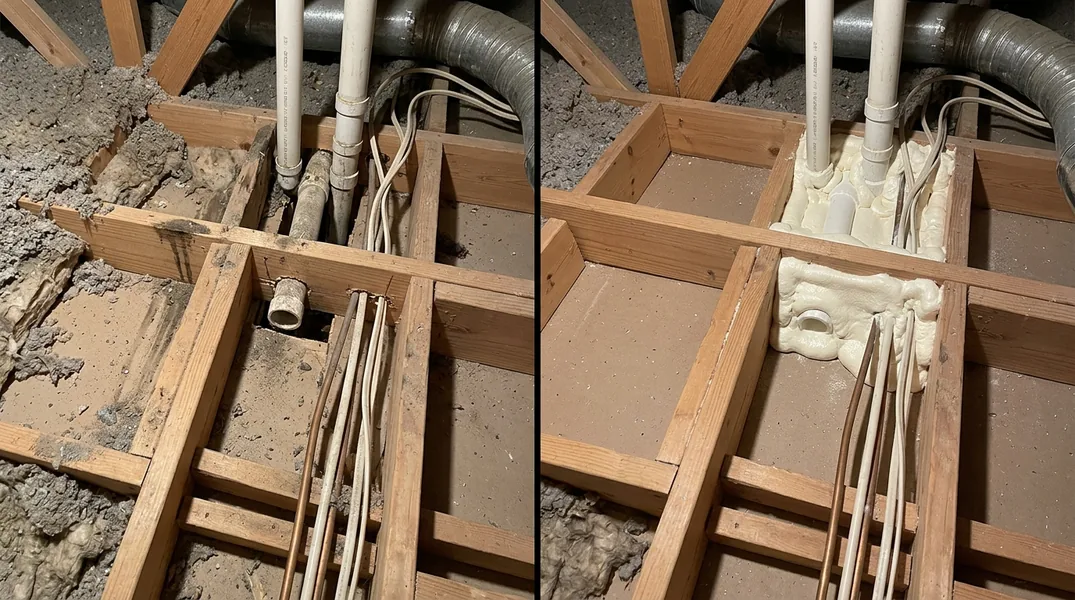
Understanding the Difference: Air Sealing vs. Spray Foam
When Kenosha homeowners think about improving their attic insulation, they often wonder whether a simple air sealing approach will suffice or if they need a more comprehensive solution like spray foam. The answer depends on your home's current condition, your energy goals, and your budget.
Air sealing focuses on identifying and closing gaps, cracks, and holes where conditioned air escapes. This might include sealing around electrical outlets, pipe penetrations, and attic access points with caulk or weatherstripping. It's a targeted approach that addresses specific problem areas. Spray foam insulation, by contrast, provides both air sealing and thermal resistance in one application. When you apply Attic Spray Foam Insulation, the material expands to fill cavities, seal cracks, and create a continuous thermal barrier. This dual benefit makes spray foam particularly effective for older homes or those with irregular framing.
The key difference is that air sealing alone doesn't add R-value (thermal resistance), while spray foam does both. For many homeowners in Kenosha, this means spray foam delivers superior energy efficiency, though it typically costs more upfront.
Spray Foam Insulation R Value Per Inch: What You Need to Know
One of the most important metrics when comparing insulation products is the R-value per inch. This tells you how much thermal resistance you're getting for each inch of material thickness. Understanding this helps you determine how thick your insulation needs to be and whether spray foam is a cost-effective choice for your situation.
Open Cell Spray Foam Insulation typically provides an R-value of 3.5 to 3.6 per inch, making it a solid choice for interior applications where moisture management is a consideration. Closed Cell Spray Foam Insulation, however, delivers superior performance at roughly 6.0 to 7.0 R-value per inch. This higher density makes closed-cell foam ideal for attics, crawl spaces, and exterior walls where you want maximum insulation in minimal space. The higher R-value per inch means you need less material to meet your target R-value, which can reduce material costs even if the per-unit price is higher.
For attic applications in Wisconsin, where winters are long and cold, the higher R-value density of closed-cell foam often justifies the investment. You'll achieve better energy performance and potentially see faster payback through reduced heating costs compared to open-cell alternatives or traditional fiberglass batts.
How Thick Should Spray Foam Be: Meeting Wisconsin's R Value Requirements
Wisconsin's climate demands serious insulation performance. The state's building codes and energy efficiency standards require attic insulation to meet specific R-value thresholds, and understanding these requirements is essential before you invest in any insulation upgrade.
For attics in Wisconsin, the current recommended R-value is typically R-38 to R-49, depending on your specific location and the age of your home. With closed-cell spray foam at 6.0 to 7.0 R-value per inch, you'd need roughly 6 to 8 inches to meet the R-38 standard, or 7 to 8 inches for R-49. Open-cell foam would require approximately 11 to 14 inches for the same R-value. This is where spray foam's efficiency shines: you can meet or exceed Wisconsin's R value requirements by state codes without consuming excessive attic space, which is especially valuable if you need to preserve headroom or access.
The thickness also depends on whether you're insulating just the attic floor or the entire attic envelope (including roof decking and walls). Full envelope insulation with spray foam creates a more comfortable, energy-efficient home because it conditions the entire attic space rather than just isolating it. A professional assessment from Kenosha Spray Foam Insulation can determine the exact thickness needed for your home's specific layout and your energy goals. Contact us at (262) 287-9947 to discuss your situation.
Attic Spray Foam Insulation Cost in Kenosha: What to Budget
Cost is often the deciding factor for homeowners comparing air sealing to spray foam. While air sealing is less expensive upfront, typically ranging from $500 to $1,500 for a whole-home effort, spray foam insulation represents a larger investment. Closed-cell spray foam for an average attic might cost $1,500 to $3,500 or more, depending on square footage and thickness. Open-cell foam is usually 20 to 30 percent less expensive but delivers lower R-value per inch.
However, the full picture includes potential savings through insulation tax credits and rebates. The federal government offers tax credits for energy-efficient home improvements, and Wisconsin may offer additional state or utility rebates. These incentives can significantly reduce your net cost. Some utility companies in the Kenosha area provide rebates for attic insulation upgrades, especially when you achieve a minimum R-value improvement. Check with your local utility to see what insulation tax credit and insulation rebates you qualify for before making your final decision.
When evaluating spray foam pricing, remember that you're investing in long-term energy savings, improved comfort, and often increased home value. Many homeowners recover their investment through reduced heating and cooling costs within 5 to 10 years, depending on local energy rates and the extent of the upgrade. For an accurate quote tailored to your home and budget, request a free estimate from our team.
When Air Sealing Alone Might Be Enough
Not every home requires full spray foam insulation. Air sealing alone can be a smart choice if your attic already has adequate insulation (R-30 or higher), but you notice drafts or energy inefficiency. Homes built in the 1990s or later often have reasonable baseline insulation; they just need the air leaks plugged. Sealing gaps around penetrations, ductwork, and the attic access hatch can eliminate 10 to 20 percent of home energy loss in some cases.
Air sealing is also the right first step for homeowners on a tight budget or those who want to test improvements before committing to a larger project. You can air seal your attic for a few hundred dollars, monitor your energy bills, and then decide whether additional insulation is worth the investment. However, if your attic is under-insulated, has irregular framing, or if you're experiencing significant comfort issues, spray foam is likely the better long-term solution because it addresses both air leakage and thermal resistance simultaneously.
Spray Foam vs. Air Sealing: Making Your Decision
The choice between air sealing and spray foam ultimately depends on three factors: your home's current insulation level, your energy goals, and your budget. If your attic is already well-insulated but drafty, air sealing may be sufficient. If your attic is under-insulated, poorly sealed, or if you want maximum energy efficiency and comfort, spray foam is the more comprehensive solution.
Homeowners in Kenosha and surrounding areas like Pleasant Prairie benefit from professional guidance when making this decision. A qualified contractor can assess your attic's current R-value, identify air leaks, evaluate your home's thermal performance, and recommend the most cost-effective path forward. Kenosha Spray Foam Insulation offers comprehensive attic evaluations to help you understand your options and make an informed choice.
Whether you're leaning toward air sealing, spray foam, or a combination approach, the most important step is to take action. Energy inefficiency costs you money every month and reduces your home's comfort. Call us today at (262) 287-9947 or request a free estimate to learn which solution is right for your home and to explore available insulation tax credits and rebates in your area.
Looking for a professional spray foam insulation contractor in Kenosha? Kenosha Spray Foam Insulation responds fast for all your spray foam insulation needs.
Get a Free Quote